Showing posts with label classics. Show all posts

Wednesday, August 20, 2014

Nessie Reviews ☆ The Case-Book of Sherlock Holmes

The Case-Book of Sherlock Holmes by Sir Arthur Conan Doyle
Publisher: Little, Brown Company
Release Date: 2004
Source: Bought
Date Read: 8/23/13 to 8/15/14
303 Pages
Rating: 


The last twelve stories written about Holmes and Watson, these tales reflect the disillusioned world of the 1920s in which they were written. Some of the sharpest turns of wit in English literature are contrasted by dark images of psychological tragedy, suicide, and incest in a collection of tales that have haunted generations of readers.


Goodreads | Amazon | B&N | Book Depository

I impulse bought this from a local bookstore in New York half-way through my Freshman year because I was really upset about BBC's Sherlock hiatus and wanted something to fill the void, so I figured reading the original Sherlock would be the best way to satisfy my craving.

Two things I need to let you guys know up front before getting into the review: 1) I read this book on and off over the course of a year. I treated it more as a filler book when I wasn't able to get my hands onto anything else. 2) I didn't realize these were the last Sherlock stories until after I finished reading it and checked its Goodreads page, because I'm just a genius like that. 


This is the perfect time to mention that I DETEST reading things out of chronological order
Anyways, this collection contains the final twelve adventures of Sherlock and his dear Watson. Of these twelve my favorite was "The Problem of Thor Bridge" because of the twists and turns the case took, the motive of the culprit, and just how it all came from an unfortunate misunderstanding. This is not to say that the other cases weren't as engaging (I also thoroughly enjoyed "The Adventure of the Retired Colourman" and "The Adventure of Lion's Mane"), it's just that in general I don't find most British works written in the late 1800's to early 1900's as engaging or interesting as other books that I read. I think it just something to do with the language and the way it's written that I think creates some distance between me and the story--and it's the only reason that I gave this collection 3 stars. Actually...the more I think about it, I think the style just reminds me too much of the books I was required to read, but cared little for throughout high school and college.

That being said, Sir Conan Doyle is an excellent writer. He's not as flowery or beautiful as Fitzgerald (one of my favorite writers) in his writing, but he exerts quiet kind of control that I really enjoyed. I guess the best example of this is through his descriptions of the various characters. When a new character entered I would immediately visualize them in one way or another. However, over the course of a couple paragraphs or pages Doyle would quietly drop the occasional adjective or note about their demeanor, that made me revise my mental image of them. These little revisions were done so discreetly that it wasn't until the character left the scene that I would realize just how drastically my imagining of them had changed. Even outside of character descriptions, throughout reading I felt comfortable that my narrator was in complete control of the story and would gently guide me along where I needed to go.

Also, I was pleased to see that Sherlock was just as much as an immature,

"The good Watson had at that time deserted me for a wife, the only selfish action I can recall in our association."
sassy little twat,

"On my word, Watson, you are coming along wonderfully. You have done very well indeed. It is true you have missed everything of importance, but you have hit upon the method..."

that is in love cares deeply for his good friend Watson,

"'You're not hurt, Watson? For God's a sake, say that you are not hurt!'
It was worth a wound--it was worth many wounds--to know the depth of loyalty and love which lay behind that cold mask. The clear, hard eyes were dimmed for a moment, and the firm lips were shaking. For the one and only time I caught a glimpse of a great heart as well as of a great brain. All my years of humble but single-minded service culminated in that moment of revelation."

that I remember from BBC Sherlock.


So if you've only ever heard of Sherlock Holmes, but never actually read any of the book give it a shot! However, don't make the same dumb mistake I did and actually start with the first Sherlock story, titled A Study in Scarlet.


Vanessa is Val's bestest buddy, and she will be guest posting throughout the summer because she loves to read and write. You can also find her at her own blog, Musings of an Aspiring Writer.

Tuesday, July 1, 2014

Top Ten Tuesday #17

Hosted by The Broke and the Bookish

Top Ten Classics I Want To Read

Ah nooooo I barely posted anything last week. I really need to get on my reading, I will try harder this week! For now though I'll just keep on commenting as usual.

Oh, this week's topic is classics? I don't really read many classics, but if I were to pick ten of them that I absolutely had to read sometime the future, then it would be:

Note that I consider all of these classics because 1) I'm familiar with it being a classic, and 2) I looked through the tag on Goodreads.


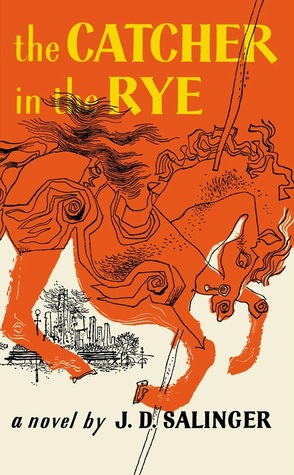
Catcher in the Rye by J.D. Salinger - I've always wanted to read this, because it's technically considered Young Adult, and is also a coming of age story. But other than that, I don't exactly know the plot of the story.

The Great Gatsby by F. Scott Fitzgerald - I kinda want to read this after watching the movie.

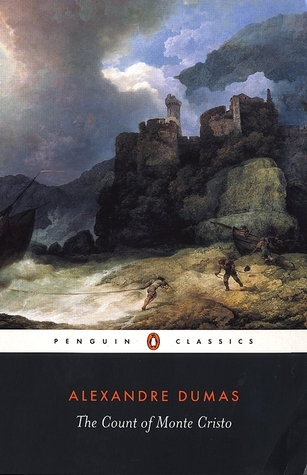
The Count of Monte Cristo by Alexandre Dumas - My best friend is obsessed with this, so that means it's really good, right?

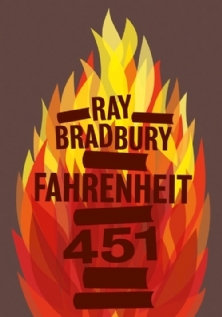
Fahrenheit 451 by Ray Bradbury - Yay a dystopia! And burning books? What?


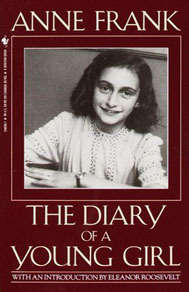
The Diary of a Young Girl by Anne Frank - I'm in the WWII mood, which is why I should read Anne Frank's Diary. Because it's Anne Frank.

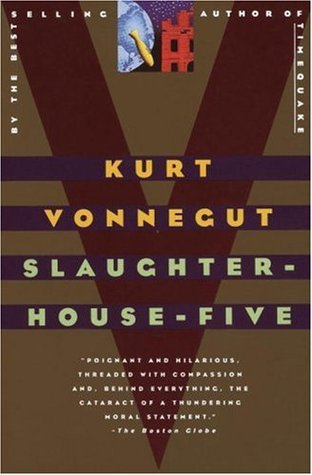
Slaughterhouse-Five by Kurt Vonnegut - So I discovered this title through another fiction book, and I've been interested in it, but I have no idea what the plot is.

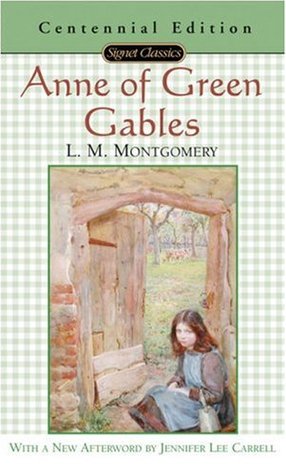
Anne of Green Gables by L.M. Montgomery - I have the urge to read this book even though it sounds so light-hearted. It just looks so fun!

1984 by George Orwell - I've been meaning to read this ever since my best friend read it for her English class, and also since I read Brave New World.


Watership Down by Richard Adams - IT'S ABOUT BUNNIES AND I DON'T KNOW WHY BUT BUNNIES.

A Little Princess by Frances Hodgson Burnett - This is my favorite childhood movie of all time and I should read this book.


Any classics on your list? Any ones that you would recommend? Link your TTTs below :D


Friday, June 13, 2014

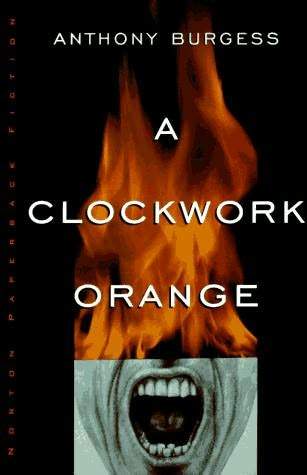
Nessie Reviews ☆ A Clockwork Orange

A Clockwork Orange by Anthony Burgess
Publisher: W. W. Norton & Company
Release Date: April 17th, 1995
Date Read: 5/26/14-6/1/14
213 Pages
Rating: ✰1/2

A vicious fifteen-year-old "droog" is the central character of this 1963 classic, whose stark terror was captured in Stanley Kubrick's magnificent film of the same title.

In Anthony Burgess's nightmare vision of the future, where criminals take over after dark, the story is told by the central character, Alex, who talks in a brutal invented slang that brilliantly renders his and his friends' social pathology. A Clockwork Orange is a frightening fable about good and evil, and the meaning of human freedom. When the state undertakes to reform Alex—to "redeem" him—the novel asks, "At what cost?"

This edition includes the controversial last chapter not published in the first edition and Burgess's introduction "A Clockwork Orange Resucked".

Goodreads | Amazon | B&N | Book Depository

I've actually bought this book a bit over a year ago because I had heard excellent things about the movie and wanted to read the book that inspired it before watching the film. It took a while for me to get to reading it because other books and video games (and classes) would call my attention more strongly. But in the year it took me to get around to reading it, I was constantly reminded about what an influential book it was and that it was on Time's "100 best English-language novels since 1923". Needless to say, I expected to be completely mind-blown by this novel, to be completely drawn in, and be constantly wrestling with questions about morality and leave the book with a radically different view of the world.

But that's not what happened. If anything, I felt like I spent most of the book expecting something big and mind-blowing to hit me. It never came, and once I put the book down I basically felt like this.

Yes,  I "meh"ed a classic, but don't hate me
But I'm getting ahead of myself, let me start from the beginning and with the things I liked.

The first thing I noticed when I began reading the book was the slang. Alex, the narrator, speaks predominantly in an invented slang called "Nadast". At first this made the book a bit hard to understand, as I felt he was talking in a completely different language. However after about twenty or so pages of reading I started to get the hang of it and reading was not as much as a struggle. But I think this initial disconnect threw me off a little bit, even though Alex was a very charismatic narrator. That being said, as a writer, I see the genius and value in using Nadast.

As I mentioned, with the slang there is a disconnect between what you read and what you eventually come to understand is happening. And the first part of the book is filled with atrocious crimes committed by Alex and his gang. He describes these acts as if he's narrating an orchestral piece and since I couldn't perfectly understand all the words, it wouldn't be until half-way through or directly after his crime that I understood what had transpired.

My face after each realization

As a writer I soon came to appreciate the role the language played in distancing Alex (and by extension the reader) from Alex's crimes. I think it also aided it understanding just how much of a true sociopath he was if he could describe the most heinous acts in the most whimsical ways.

This book is divided into three sections, each with seven chapters. I knew not to expect too much from from the first section because I knew that its primary purpose was exposition. So I expected all my expectations to be met by the second part. That didn't exactly happen.

There was the occasional quote from a character that caused me to put down the put as I had to seriously mull over what they just said. One such quote was this one said shortly before Alex began his treatment: “Does God want goodness or the choice of goodness? Is a man who chooses to be bad perhaps in some way better than a man who has the good imposed upon him?”  I think this question in particular struck me because I had witnessed the true evil that Alex was capable of. Furthermore, seeing what Alex was reduced to after the treatment really humanized him for me and made this question more weighty. 

Overall, I think the one problem I had with this book is that I went in expected way too much from it. If I had gone in with low or no expectations I probably would not have spent every page waiting for something "big" to happen. While reading I did like some of the questions and themes raised, but I just wanted more. It's only as I now write this review that I'm discovering where my feelings of "meh"-ness came from.


I still would recommend the book--because of the great moral questions raised--but I would strongly remind future readers not to go in expecting obscene amounts of books simply because they are classics. Even if a book is a classic, still go in expecting nothing as you would from any random book picked off a shelf. At least that way, you won't have to experience the "disappointment" I felt. 


Vanessa is Val's bestest buddy, and she will be guest posting throughout the summer because she loves to read and write. You can also find her at her own blog, Musings of an Aspiring Writer.
Saturday, May 3, 2014

Review: The Twenty-One Balloons

The Twenty-One Balloons by William Pène du Bois
Publisher: Puffin
Released: 1986 (First published in 1947)
Professor William Waterman Sherman just wants to be alone. So he decides to take a year off and spend it crossing the Pacific Ocean in a hot-air balloon the likes of which no one has ever seen. But when he is found after just three weeks floating in the Atlantic among the wreckage of twenty hot-air balloons, naturally, the world is eager to know what happened. How did he end up with so many balloons . . . and in the wrong ocean?


Taken from Goodreads

Start: 4/30/2014 | End: 5/2/2014 | Pages: 180 | Rating: 3.5 Stars   


My Thoughts:


Ok, so I actually read the 1947 version of this book from the school library, but Goodreads is down today! So I can't update all my information until all that comes back up. Like wow, it's been down for quite a while now.

The Twenty-One Balloons is a classic apparently, like Gulliver's Travels, and it was written for a reason, maybe to promote adventuring in the 1940's. Did you guys know that Gulliver's Travels wasn't meant for children, but actually written as a reflection of the public during the time, and how the people are just trusting the government with everything? So deep. 

Children's book or not, The Twenty-One Balloons is very much all about hot air balloons, the strange island of Krakatoa, and its eccentric but well-mannered inhabitants. To sum it up, Professor Sherman hops on a hot air balloon journey, but his travel of 100 days fall short to 7, when he crash lands on the island of Krakatoa. Instead of being stranded on a deserted island, he finds himself being picked up by Mr. F, one of the island's well-dressed inhabitants. And as Mr. F introduces Professor Sherman to every family, from Mr. and Mrs. A and their two children to Mr. and Mrs. T, he sees extravagant houses matching the architectures of different countries, and tastes the food of every country the family is in charge of. And lastly, how do these families survive so well off? Well off of the millions of diamonds of course! Basically this story is full of food, diamonds, and hot air balloons.

Here's an island full of food have fun = literally the book

This is the most wildly, imaginative children's book I've ever read. Not only that, but it's just so...creative...like how can someone come up with that? Half of the book is spent talking about how each of the 20 families are in charge of meals for one day (in the cycle), and their letter corresponds to the beginning of their country, like the F family is for France and M is for Moroccan. AND WHERE DO THEY GET ALL THIS FOOD? Oh of course we take a couple of diamonds from the mines and then we sail over to different countries each time, sell the diamonds, and then buy a crapload of food and materials to make gigantic fabulous houses and cook amazing meals. 

So very unrealistic. But this was written in 1947, that should explain this. Right? 

You know what I did like though? In my old, tattered library book, there were a decent amount of very, very nice illustrations. If I were to imagine a book from the olden days (haha), this would be the book I would think about. Look at some of these amazing illustrations!


Also, it may just be that this was written so long ago, but this story was basically just telling and not much showing. There was a lot of information, but in a fun...sort of way? The writing style definitely reflects the time period it was written in. I'm not saying this was a bad thing, but just an observation.

Overall, this was a pretty fun read. I read it for book club at school, and we didn't discuss it much because it was an end of the year read. It's a fun children's book, that was written a long time ago! 

I think I'm going to make Classics reviews a thing, in that it's not an actual formal review, but just something I picked up because it's either a classic or required or whatever. I just really wanted to showcase this old book haha! 

Have you been reading any cool classics lately? Or has it been all Jane Austen?


(I've been seeing a lot of Jane Austen on my feed)
This site uses IntenseDebate to manage comment data. Learn more about how that is processed here.