Showing posts with label children's. Show all posts

Friday, September 23, 2016

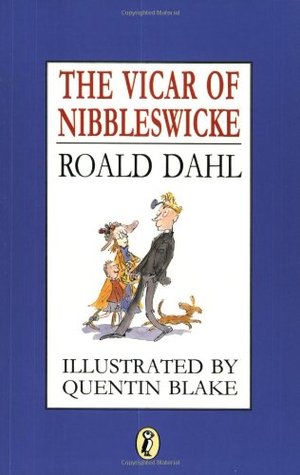
Review: The Vicar of Nibbleswick (Happy 100th Birthday Roald Dahl)

The Vicar Of Nibbleswicke by Roald Dahl
Publisher: Puffin Books
Release Date: May 1st, 1994
Source: Blog Tour
Date Read: 9/18/16
48 pages
Rating: 


The Reverend Lee is suffering from a rare and acutely embarrassing situation: Back-to-Front Dyslexia. It affects only his speech, and he doesn't realize he's doing it, but the parishioners of Nibbleswicke are shocked and confused by his seemingly outrageous comments.


Goodreads | Amazon | B&N | Book Depository

I received this book from the publisher in exchange for an honest review. 

Flashback to second grade, where my teacher read to us most of Roald Dahl's books. It was there that I learned about James and the Giant Peach, The Witches, The BFG, and more. When my teacher mentioned that that was all the books we would read by him, I distinctly remember telling her that NO those weren't all the books and there were MORE. And then I went on a frenzy looking for more of his books. It was an obsession.

The Vicar of Nibbleswicke was one of those books we never got to. Though it is a picture book and not as well known as the others, it encompasses the same quality. In The Vicar of Nibbleswicke, the main character is dyslexic, but has learned to control it. Until the day he becomes the Vicar, it all unravels! Next thing you know, he's saying "dog" instead of "God". Hilarity ensues.

(Even though I am not a speech pathologist, it seems more than a coincidence that I am reviewing this seeing as my area of interest is language production and speech planning).

I quite enjoyed The Vicar of Nibbleswicke! If you have children, or are looking for a fun, short read, then this may be the book for you! You can win it in the giveaway at the end of this post!

Roald Dahl (1916–1990) was one of the world’s most imaginative, successful and beloved storytellers. He was born in Wales of Norwegian parents and spent much of his childhood in England. After establishing himself as a writer for adults with short story collections such as Kiss Kiss and Tales of the Unexpected, Roald Dahl began writing children's stories in 1960 while living with his family in both the U.S. and in England. His first stories were written as entertainment for his own children, to whom many of his books are dedicated.

Roald Dahl’s first children’s story, The Gremlins, was a story about little creatures that were responsible for the various mechanical failures on airplanes. The Gremlins came to the attention of both First Lady Eleanor Roosevelt, who loved to read the story to her grandchildren, and Walt Disney, with whom Roald Dahl had discussions about the production of a movie.

Roald Dahl was inspired by American culture and by many of the most quintessential American landmarks to write some of his most memorable passages, such as the thrilling final scenes in James and the Giant Peach - when the peach lands on the Empire State Building! Upon the publication of James and the Giant Peach, Roald Dahl began work on the story that would later be published as Charlie and the Chocolate Factory and today, Roald Dahl’s stories are available in 58 languages and, by a conservative estimate, have sold more than 200 million copies.

Roald Dahl also enjoyed great success for the screenplays he wrote for both the James Bond film You Only Live Twice in 1967 and for Chitty Chitty Bang Bang, released one year later, which went on to become a beloved family film. Roald Dahl’s popularity continues to increase as his fantastic novels, including James and the Giant Peach, Fantastic Mr. Fox, Matilda, The BFG, and Charlie and the Chocolate Factory, delight an ever-growing legion of fans.

Two charities have been founded in Roald Dahl’s memory: the first charity, Roald Dahl’s Marvellous Children’s Charity, created in 1991, focuses on making life better for seriously ill children through the funding of specialist nurses, innovative medical training, hospitals, and individual families across the UK.

The second charity, The Roald Dahl Museum and Story Centre – a unique cultural, literary and education hub – opened in June 2005 in Great Missenden where Roald Dahl lived and wrote many of his best-loved works. 10% of income from Roald Dahl books and adaptations are donated to the two Roald Dahl charities.

On September 13, 2006, the first national Roald Dahl Day was celebrated, on what would have been the author’s 90th birthday. The event proved such a success that Roald Dahl Day is now marked annually all over the world. September 13, 2016 is Roald Dahl 100, marking 100 years since the birth of the world’s number one storyteller. There will be celebrations for Roald Dahl 100 throughout 2016, delivering a year packed with gloriumptious treats and surprises for everyone.


Don't forget about the giveaway below!
1 winner can pick 5 books from the Roald Dahl collection! US Only.

Thursday, August 11, 2016

Review: Furthermore

Furthermore by Tahereh Mafi
Publisher: Dutton Books for Young Readers
Release Date: August 30th, 2016
Source: ALA Midwinter
Date Read: 3/24/16 to 3/28/16
416 pages
Rating: 


There are only three things that matter to twelve-year-old Alice Alexis Queensmeadow: Mother, who wouldn’t miss her; magic and color, which seem to elude her; and Father, who always loved her. The day Father disappears from Ferenwood he takes nothing but a ruler with him. But it’s been almost three years since then, and Alice is determined to find him. She loves her father even more than she loves adventure, and she’s about to embark on one to find the other.

But bringing Father home is no small matter. In order to find him she’ll have to travel through the mythical, dangerous land of Furthermore, where down can be up, paper is alive, and left can be both right and very, very wrong. Her only companion is a boy named Oliver whose own magical ability is based in lies and deceit—and with a liar by her side in land where nothing is as it seems, it will take all of Alice's wits (and every limb she's got) to find Father and return home to Ferenwood in one piece. On her quest to find Father Alice must first find herself—and hold fast to the magic of love in the face of loss.

I received this ARC in exchange for an honest review. Quotes taken from ARC may or may not be in the published edition.

So I actually ended up enjoying Furthermore much more than Shatter Me, which just shows how different the two are from each other. Besides being marketed as Middle Grade, Furthermore

We're introduced to Alice, who so badly wants to go on a quest, away from Ferenwood. She's so self-conscious of the fact that she isn't comprised of color, while everything else in Ferenwood does. Just imagine, everyone is bursting with color from their hair to their eyes. Alice on the other hand sticks out like a sore thumb, with her colorless, clear milky hair. To add on to that, Alice's father has mysteriously disappeared. In order to save him, she plans on winning over the judges with her one special talent, one every child in Ferenwood is born with.

But of course, things go wrong. Alice is stuck with a boy she doesn't want around. And even better, she discovers that her father is stuck in this god awful place, one where logic is basically nonexistent. Now here's where things get interesting. Furthermore is without any sort of order, meaning any strange thing can occur really. This reminded me of the The Girl Who Circumnavigated Fairyland in a Ship of Her Own Making, which is why I think I liked this book so much. But just to give you a taste, there are rules such as having to carry your own ruler in order to measure the time you have in Furthermore. You also can't steal time, which is why you are assigned only a specific amount. Once your ruler runs out of time, you have illegally trespassed into Furthermore. There's more but I rather you discover the strangeness on your own.

Yet even with being enamoured with both Furthermore and Ferenwood, and of course with Alice and Oliver, I didn't end up rating it 5 stars. For one, I found it "interesting" that the author broke the fourth wall a lot. I mean I didn't mind it, but then again I wasn't such a huge fan of it either. To me if just felt a little out of place I suppose.

I also felt misinformed about what was happening multiple times. For example, I was completely under the impression that Alice's ability was that she could tell the truth as long as she didn't lie once. And I wasn't sure when that was still in effect, because Oliver was definitely telling a lot of lies. And at times she accepted them, even though she should have seen through them. Did I miss the lie she made at one point? Or was that just describing a moment in her past? I felt deceived when I discovered what her real talent was, the one she was actually born with.

Lastly, I found the ending to be incredibly convenient. Though now that I think about it, this is Middle Grade. Plus this didn't bother me that much.

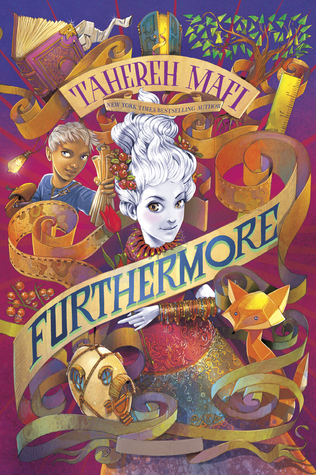
Furthermore ended up being a very fun, unique read for me, even though I don't usually read Middle Grade. Plus just look at that cover. It is absolutely gorgeous.

Friday, April 24, 2015

Review: Beastkeeper

Beastkeeper by Cat Hellisen
Publisher: Henry Holt and Co. (BYR)
Release Date: February 3rd, 2015
Source: Library
Date Read: 4/14/15 to 4/15/15
208 pages
Rating: 


Sarah has always been on the move. Her mother hates the cold, so every few months her parents pack their bags and drag her off after the sun. She’s grown up lonely and longing for magic. She doesn’t know that it’s magic her parents are running from.

When Sarah’s mother walks out on their family, all the strange old magic they have tried to hide from comes rising into their mundane world. Her father begins to change into something wild and beastly, but before his transformation is complete, he takes Sarah to her grandparents—people she has never met, didn’t even know were still alive.

Deep in the forest, in a crumbling ruin of a castle, Sarah begins to untangle the layers of curses affecting her family bloodlines, until she discovers that the curse has carried over to her, too. The day she falls in love for the first time, Sarah will transform into a beast . . . unless she can figure out a way to break the curse forever.

Goodreads | Amazon | B&N | Book Depository

Are you looking for a wonderful, happy fairy tale? One with a happy ending and all that jazz? Well then, you are in the wrong place! If you thought this would be a cute MG retelling, you are wrong.


Beastkeeper is a nice, quick read about a girl, Sarah, longing for magic, but unfortunately she really doesn't know what she's asking for. Once she encounters it through a family curse, one that turns her grandfather, her father, and even herself into a beast if their first love doesn't love them. After finding that out, after living a semi-normal life, who wouldn't want to go back to being ordinary?

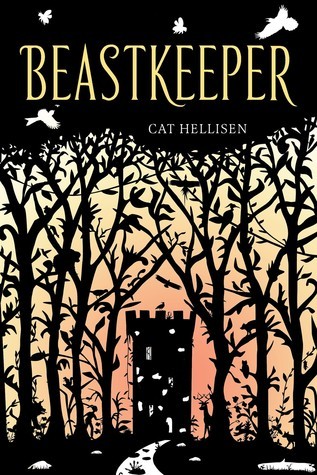
I used to be a huge fan of Newgrounds, a site dedicated to animated shorts and movies. One of the animated movies I watched featured this character, Bitey the last of the Dashkin. So the whole "beast" concept really reminded me of him. Art link on image.

There are a number of aspects I loved about this dark MG, one being that it questions the little things other fairy tales often ignore. How are curses passed down through the family? Who does it affect? What happens if love doesn't last? Is love real if it's only based on outside beauty? Do happy endings actually exist?

The curses in the book all revolve around the two families, and it's fascinating to see how everything weaves together and affects one another. So many coincidences! And it's all up to Sarah to fix everything, which ends up seeming more and more impossible as the story goes on. I did like Sarah, but I was more fixed on the whole story rather than the characters. Though I do want to know more about Alan, even though I may or may not hate him.

Also, guess what? No romance! Don't get me wrong, I love romance sometimes, but I'm just glad this didn't have any because it doesn't need it. And yes it is MG, which is why. The focus was on the plot and the story, and no meaningless fluff was added in to detract from that. My one gripe is that I'm not entirely sure I understood the ending, but that is so typical of me. And also, when does this take place? At first I thought it was in our normal world, but then we were whisked away to this medieval, forest like place which held a lot of magic, and from then on I didn't know when or where.  

Beastkeeper was overall, executed very well, and it's a great refreshing take on retellings, even if it isn't exactly a happy one.    

Friday, August 29, 2014

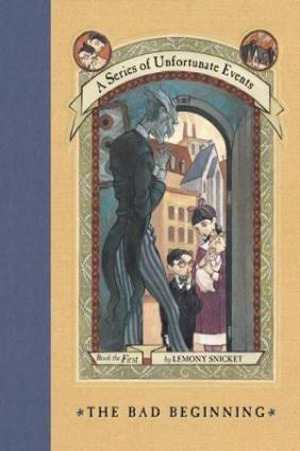
Nessie Reviews ☆ A Series of Unfortunate Events


A Series of Unfortunate Events

Number of Books: 13
Publisher: HarperCollins
Release Date of First Book: September 30th, 1999
Release Date of Last Book: October 13th, 2006

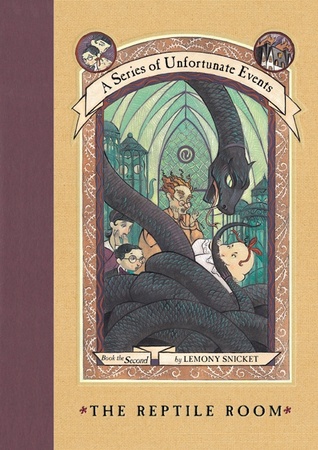
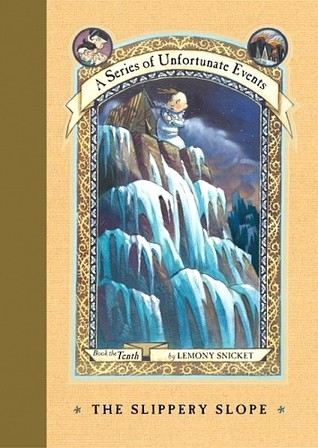
The executor of the Baudelaire estate -- a phlegm-plagued banker named Mr. Poe - sends the children to live with a distant relative: a conniving and dastardly villain named Count Olaf, who has designs on the Baudelaire fortune. Count Olaf uses the children as slave labor, provides horrid accommodations for them, and makes them cook huge meals for him and his acting troupe, a bunch of odd-looking, renegade good-for-nothings. When the children are commandeered to appear in Count Olaf's new play, they grow suspicious and soon learn that the play is not the innocent performance it seems but rather a scheme cooked up by Olaf to help him gain control of the children's millions.

All this bad luck does provide for both great fun and great learning opportunities, however. Violet is a budding McGyver whose inventions help the children in their quest, Klaus possesses a great deal of book smarts, and Sunny -- whose only real ability is an incredibly strong bite -- provides moral support and frequent comedy relief. Then there are the many amusing word definitions, colloquialisms, clichés, hackneyed phrases, and other snippets of language provided by the narrator (a character in his own right) that can't help but expand readers' vocabularies. Though the Baudelaire children suffer myriad hardships and setbacks, in the end they do manage to outsmart and expose Olaf's devious ways. But of course, with luck like theirs, it's a given that Olaf will escape and return to torment them again some day. If only misery was always this much fun.


When I was little, my school's library had the Series of Unfortunate Events series, but they had two red dots on their spines. One read dot meant that you had to be at least in sixth grade to check it out, and two red dots meant that only eighth graders could check it out. However, by the time I reached sixth grade, I realized that the local public library had no such age restrictions and read the entire series within a month. I thoroughly enjoyed the series, but I didn't quite understand why the series was restricted to the older kids. Yes, it was a bit sad at times, but nothing my little eleven year old self couldn't endure.

However, having read it for the second time--this time at twenty years old, I can wisely say that my eleven year old self was dead wrong. I don't know what I missed as a kid but these books are SO FRICKING DEPRESSING. For example, the series opens with the Violet, Klaus, and Sunny Baudelaire's lovely day at the beach being interrupted by the news that their house burnt down in a fire that also claimed the lives of their parents. Did I mention that their respective ages are 14, 12, and under 1?


Anyways, after getting this news the orphans are placed in the custody of Count Olaf, who is their "third cousin four times removed or fourth cousin three times removed" according to Mr. Poe, the incompetent banker in charge of the Baudelaire fortune until Violet turns eighteen. However, after spending some time at his filthy mansion, the orphans discover that Olaf is only after their fortune. I really don't want to give too many spoilers away in this reviews, but the Baudelaires are able to stop his scheme and placed in the custody of another guardian. But Olaf is not so easily assuaged and hunts them down and comes up with a scheme to once again steal their fortune. And this is pretty much the formula for the first few books: orphans arrive in custody of an eccentric new guardian, things are relatively okay (sometimes not) as they adjust, Olaf shows up and causes trouble and/or deaths, then the kids are shipped off to another home. 

While this formula is quite obvious for the first seven books, it doesn't get tiring at all. Each new guardian is more absurd and quirky than the last. In the third book, The Wide Window, they are put under the care of their Aunt Josephine who is cripplingly afraid of everything. For example, the kids can't even turn on a stove to heat up food because she's terrified it might result in the house burning down. But outside of those, she is truly a loving guardian. They spend the fifth book, The Austere Academy, at a boarding school that has teachers who give the Baudelaire's a hard time because their orphans and where Sunny (the baby) is forced to become a secretary for the principal. However, while there they meet another set of orphans, the Quigley's who become very important as more secrets are discovered in the series. The Vile Village takes the saying "It takes a village to raise a child" proverb literally and the orphans spend the seventh book in the legal care of an entire (and quite strange) village. 

The ending of The Vile Village also drastically changes the tone and direction for the remaining books of the series. The Baudelaire orphans are framed for a crime that they did not commit and must spend the remaining books on the run as they try to discover more about the mysterious V.F.D-- a secret organization of which many characters they encounter (and their late parents) are members. There are so many questions that are raised in the second half of the book such as: what is the connection between the Quigley's and the Baudelaires? Why does Count Olaf harbor such a deep grudge against the Baudelaires? What exactly is V.F.D and what happened to it? What is the sugar bowl and why is it so damn important? And many, many other questions since the second half of the series isn't just about the Baudelaires but is also about V.F.D and the other characters they encounter.

Their motto and symbol

 However I'm sad to report that not all these questions get answered. The Baudelaire's chapter of the story get full closure (for the most part), but the larger story of which they only play a part, doesn't really get answered. And while reading, it's clear that it's not a result of laziness on the part of the author--he knows everything, but just isn't telling. It is a bit frustrating having all these questions that never will get answered, but I promise you this series is still worth a read. So I guess I'll talk about the things this series does right.

One aspect of the series that I appreciated a lot as an adult was the moral ambiguity. In the beginning, good and evil is as defined as black and white--which was something that I expected of a children's book. However as the series goes on, determining who or what is good and bad is not as simple anymore. Especially since the Baudelaires are forced to do things that are clearly quite horrible (especially in The Penultimate Peril--Book 11 >.<), but they are still good kids and those things were only done in order to protect themselves. A character in the tenth book, The Grim Grotto, says it the best:

People aren't either wicked or noble. They're like chef's salad, with good things and bad things chopped and mixed together in a vinaigrette of confusion and conflict

In addition, Lemony Snicket is the best narrator--his writing style is so unique and mature that you won't even feel like you're reading a children's book. He spends a good amount of each book urging you not to read it because of how depressing the subject matter is and has the best sense of dry humor. I guess the best way to say it is that he doesn't seem to care what he does, but that's not quite getting at it, so I'll try giving some examples. In the sixth book, The Eratz Elevator, there a a few pages that are just black, in order to show just how dark the environment was for the orphans at that point in the book.

Who cares about saving trees anyways.
There is a point The Bad Beginning when Klaus, the bookworm up late at night reading a book, and Lemony Snicket writes this.

The book was long, and difficult to read, and Klaus became more and more tired as the night wore on. Occasionally his eyes would close. He found himself reading the same sentence over and over. He found himself reading the same sentence over and over. He found himself reading the same sentence over and over.
And, my personal favorite (which technically is not from the Series of Unfortunate Events series, but it's still amazing) 

If writers wrote as carelessly as some people talk, then adhasdh asdglaseuyt[bn[ pasdlgkhasdfasdf. ~Horseradish
However, in addition to writing ridiculous sentences like these he also manages to write some of the most true things that I have ever read

“The way sadness works is one of the strange riddles of the world. If you are stricken with a great sadness, you may feel as if you have been set aflame, not only because of the enormous pain, but also because your sadness may spread over your life, like smoke from an enormous fire. You might find it difficult to see anything but your own sadness, the way smoke can cover a landscape so that all anyone can see is black. You may find that if someone pours water all over you, you are damp and distracted, but not cured of your sadness, the way a fire department can douse a fire but never recover what has been burnt down.” ~The Bad Beginning

So this post is already much longer than normal so I'm going to cut myself off here, but let it be said that I have not even covered half of what makes this series so amazing for me. There is so much more about the plot that could be said, so many unique characters that I've fallen in love with, and so many quotes that I am dying to share with you. However, I shall cut myself here in hopes that you will take it upon your self to read this wonderful series, I can promise you that you will not regret it.


Vanessa is Val's bestest buddy, and she will be guest posting throughout the summer because she loves to read and write. You can also find her at her own blog, Musings of an Aspiring Writer.

Sunday, April 6, 2014

Review: Dragon's Bait

Dragon's Bait by Vivian Vande Velde
Publisher: HMH Books for Young Readers
Released: April 1st, 2003
Fifteen-year-old Alys is not a witch. But that doesn't matter--the villagers think she is and have staked her out on a hillside as a sacrifice to the local dragon.

It's late, it's cold, and it's raining, and Alys can think of only one thing--revenge. But first she's got to escape, and even if she does, how can one girl possibly take on an entire town alone?

Then the dragon arrives--a dragon that could quite possibly be the perfect ally. . . .


Taken from Goodreads

Start: 4/2/2014 | End: 4/4/2014 | Pages: 208 | Rating: 3.5 Stars  


My Thoughts: 


I discovered this book through Tumblr, surprisingly, because the post summarized the plot of it but NEVER gave out the title. I literally had to search through the notes in order to see who answered the poster's question, and I FOUND IT. 

Dragon's Bait is a pretty old book, being published around 11 years ago. I'm surprised I never read it when I was younger, because this would have been perfect for me. There is only a tinge of romance in it, since it's technically classified as a children's book. It FEELS like a children's book. 

Our main character, Alys (such a cool name), from the start of the book, is accused of being a witch *gasp*. Her father is currently suffering from some sort of disease, and promptly dies while she's being taken away. However, instead of being burned at the stake, the Inspector, Atherton, decides to feed her to the nearby dragon as a sacrifice. This way both her, and the dragon, will be gone. 

Luckily for her, this doesn't happen, and instead, we see her befriending the dragon, Selendrile. And not only this, but the dragon can also change into any creature, including human. The reason why he rescues her is unknown, maybe it's because of her thirst for revenge at the townspeople, and the people she thought were her friends.

Don't get me wrong, I really liked this book. It was very fast-paced, and I liked both Alys and Selendrile. But the truth is, I really wished that there was more. 200 pages simply isn't enough. It's really not fair that this is a children's book, because this concept has sooooo much potential as a young adult novel. SO MUCH POTENTIAL. I would absolutely love a love story between these Alys and Selendrile. A sequel to this book would be amazing.


But no. I'm just stuck with a couple of shy glances here and there from Alys, with Selendrile just smirking from a distance. Like I can FEEL the attraction but I'm given nothing substantial.

Then again it is a children's book and I just have to calm down. (Though seriously if anyone's heard of a book similar to this one let me know asap)

I really liked how this book showed the difference between the two characters. Alys is pretty innocent, and she doesn't understand how evil the world can be sometimes, though her accusation kind of shows her this. Yet, it's not like she wants the world to burn. The revenge she seeks is fairly innocuous, like wanting to ruin the reputation of both men who accused her. She never thinks about burning the town to the ground. 

You would think that dragon boy over here would think otherwise, but he NEVER questions her! He doesn't suggest, hey let's just burn the town to the ground, but instead helps her think of ways to get revenge. The bulk of the book takes place carrying out their plans, rather than bonding (which is what I had in mind). But then there are some things he does in the background that really makes you (and Alys) question where he got it, how, and whether this should actually be a children's book or not. 

But you know what!? You can totally tell that he really likes her, whether it's romantically or not. Even though Alys keeps on telling herself not to trust him, in the end she does, and honestly I don't know how she does it. I don't want to spoiled the ending for you, but I have a head canon that both Alys and Selendrile become the best of friends. I don't care if there's another book that says otherwise.


It wasn't the best of books, but it was really fun to read. I read more than half of it in one sitting, and then the other half in the next. I would recommend this to anyone who wants a very quick read, and also misses children's books. This book also has some moral to it, like "people only believe in what they want to believe" or something like that, but I'm not sure if I caught on to it entirely. 

And yes I love HTTYD, and no it's not relatable to this book at all except DRAGONS. Excuse for me to use the gifs haha.

This site uses IntenseDebate to manage comment data. Learn more about how that is processed here.